
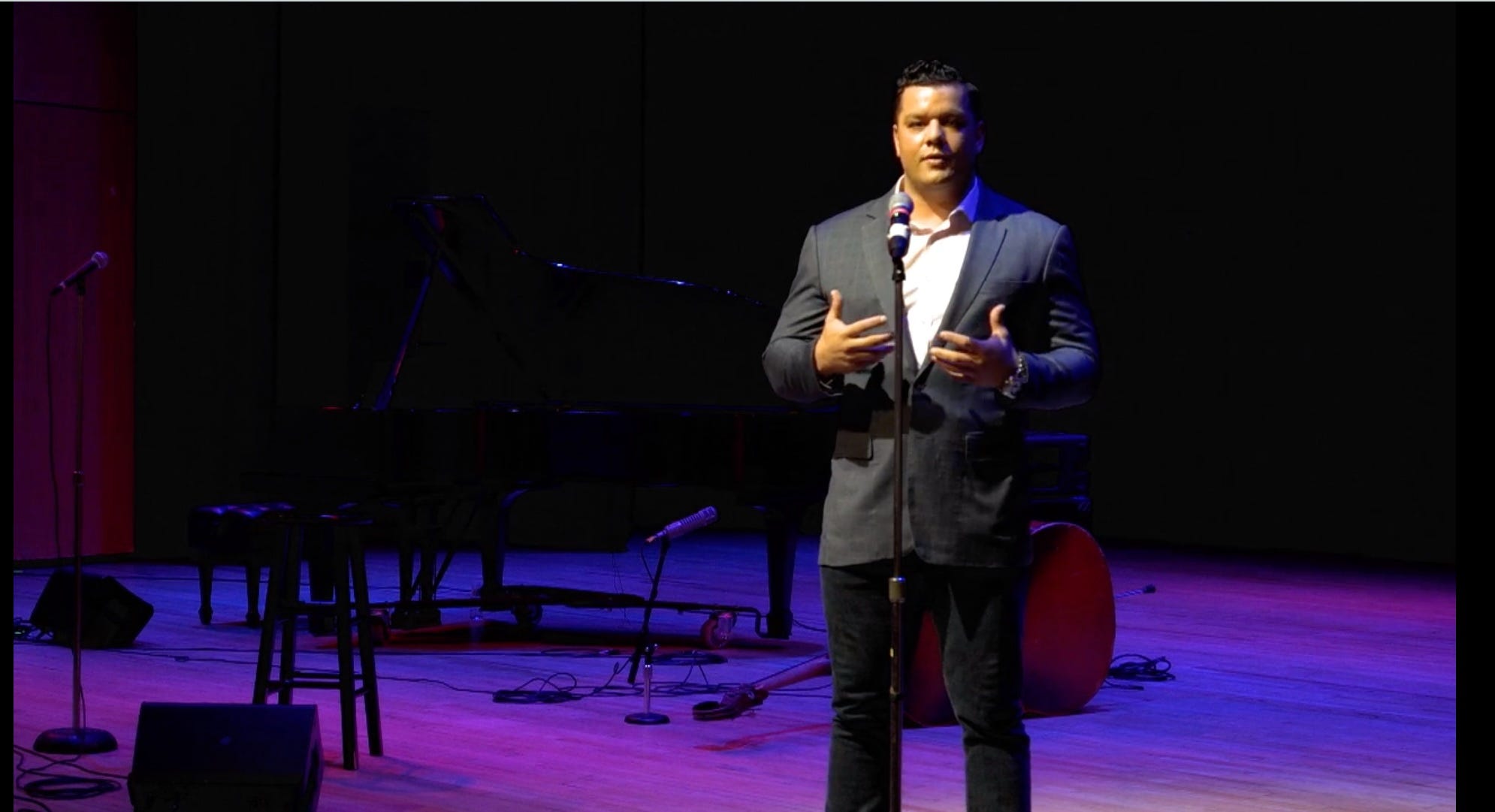
For years I lived and worked in Reston, Virginia, and got to know the place the way you only can when you work inside a community rather than just live in it.
Reston was a planned community, founded by Robert E. Simon (that’s where the name comes from, R.E.S. plus “town” ). In 1961, Bob sold his family’s property, Carnegie Hall, and used the proceeds to buy the land that became Reston. We used to joke that the best way to get to Reston was through Carnegie Hall. The arts were in the town’s DNA from the very first dollar. Public art was integrated from the beginning, and that dedication to cultural life continues today. I’m proud to have played a small role in it.
While I was running the Greater Reston Arts Center (a gallery in Reston Town Center, now known as Tephra ICA) I learned that our local high school had graduated a future NBA Hall of Famer. Grant Hill tore up the courts in Northern Virginia and eventually, and rightfully, had his jersey retired.
What struck me about Grant wasn’t the high school, collegiate, or professional success. It was what he did alongside it. Grant grew up with a love of the arts, and turned that into a serious passion for African American art. He became one of the premier collectors in the country, and sponsored a nearly three-year, seven-city tour of his personal collection called Something All Our Own: The Grant Hill Collection of African American Art.
His website describes this as “an atypical example of an athlete capitalizing on the incredible power and influence that is often left unexplored by professional athletes.” I’d put it slightly differently. I don’t think it’s rare for athletes to have artistic passions. I think it’s rare for us to ever find out about them.
Because once I started looking, they were everywhere. Serena Williams paints. Justin Tucker, the former Ravens kicker, is a trained opera singer. Etan Thomas, who played for the Wizards, is an accomplished spoken-word poet. The list is much longer than that, and I’m going to keep pulling on that thread in the months ahead, because I don’t think most people have any idea how deep it runs.
It shouldn’t be surprising. People contain multitudes. Almost nobody loves exactly one thing. But with athletes, especially the ones at the very top, we tend to see only the athlete and not the whole person standing there.
I carried that fascination around for years before I finally got to do something with it.
In January of 2021, in the middle of COVID, I created an event in Annapolis called Athletes for the Arts. It was a virtual fundraiser where the whole premise was to make the case for arts education by showing what it produces: more complete people.
The event was hosted by Julie Donaldson, then Senior Vice President of Media and Content for Washington’s NFL team. Six-time Grammy nominee Nnenna Freelon performed. And the two people at the center of it were former NFL players who had become artists.
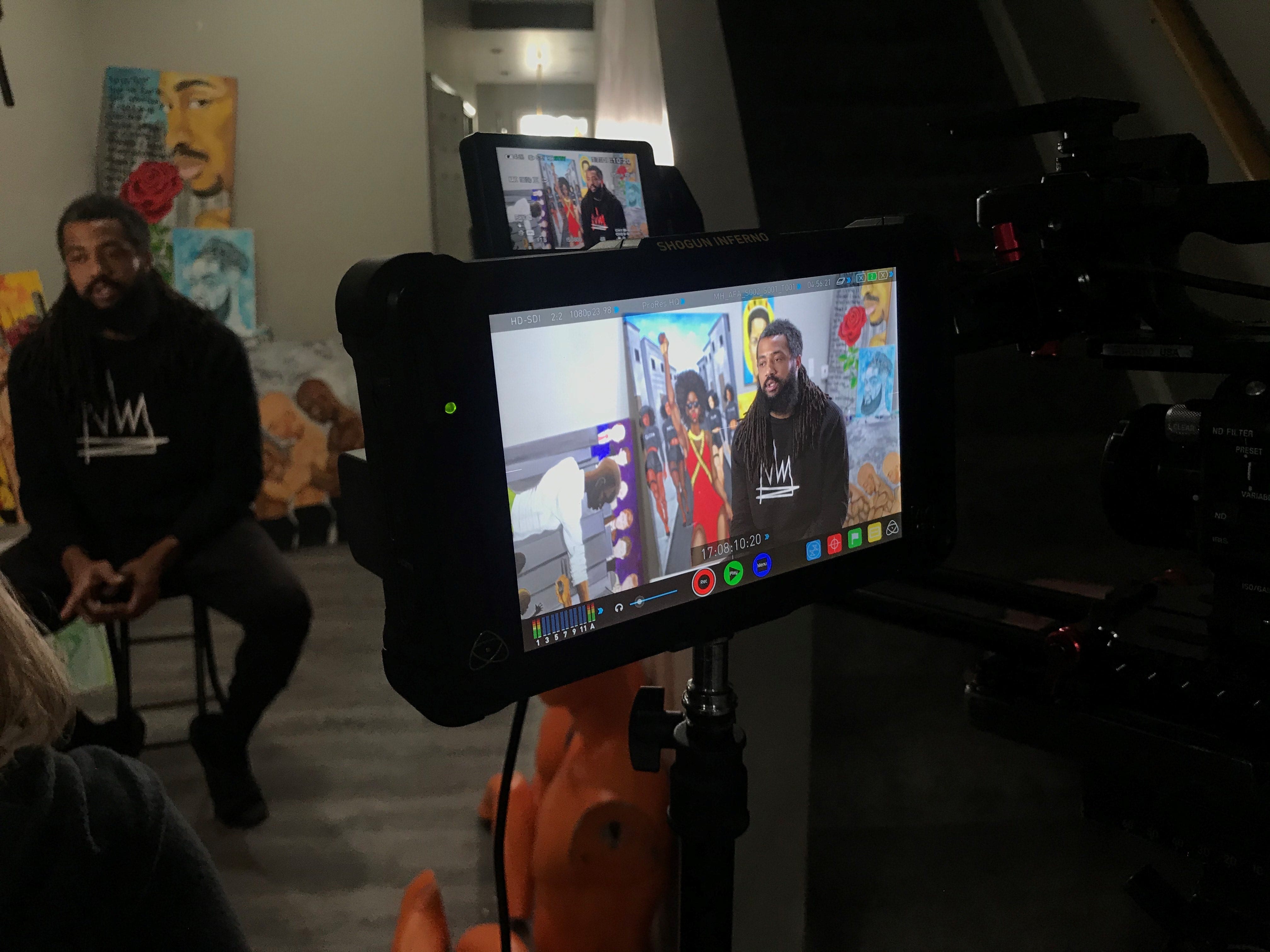
Aaron Maybin was an All-American at Penn State, drafted eleventh overall by the Buffalo Bills in 2009, and played with the Jets and Bengals before walking away from football entirely. He is now a painter, an author, an educator, and an art activist in Baltimore. What he said about his career has stayed with me: “The goal wasn’t just to get to the NFL, it was to be an example like those that I idolized when I was younger. People that were transcendent not just in their sport but in culture, because they used their platform and their opportunity to be a voice for the voiceless.”
Eric Kettani was the other. A Navy fullback who never lost to Army or Air Force, MVP of the 2007 game that gave Navy its first win over Notre Dame in forty-three years, then five seasons in the NFL with New England and Washington. He left football to pursue his work as a self-taught artist. Eric’s story was a big part in why the event landed in Annapolis in the first place. He described what art does for him this way: “It decompresses you, it pulls that stress away.” And then he turned it toward the kids the event was raising money for, the ones who get to “pry those couple of hours away from their environment, for a canvas, singing, music or dance, just to step away and be themselves.”
The show won awards, and more importantly, it worked. It told a story I think the arts field needs to keep telling.
I suspect Athletes for the Arts will have another life. I’m definitely not finished with it.
However, here’s why it matters beyond the event itself. I wrote earlier about what the arts can learn from sports about opening up our process. This is the other half of that lesson. If we are willing to look, our audiences are in places we may not be exploring.
The arts field has a habit of imagining its audience as a fairly narrow kind of person, and then marketing to that real or imagined person over and over again. But the athlete in the front row might be a painter. The season-ticket holder at the arena might be the easiest convert you’ll find. People who go out, go out. They see plays, concerts, games and films, because they are curious about the world and they want to be in the room where something is happening.
We spend a great deal of energy competing for the audience we already have. We should spend more finding the ones we’ve never thought to ask.