
I remember sitting in a rehearsal for The Invention of Love at The Wilma Theatre in Philadelphia.
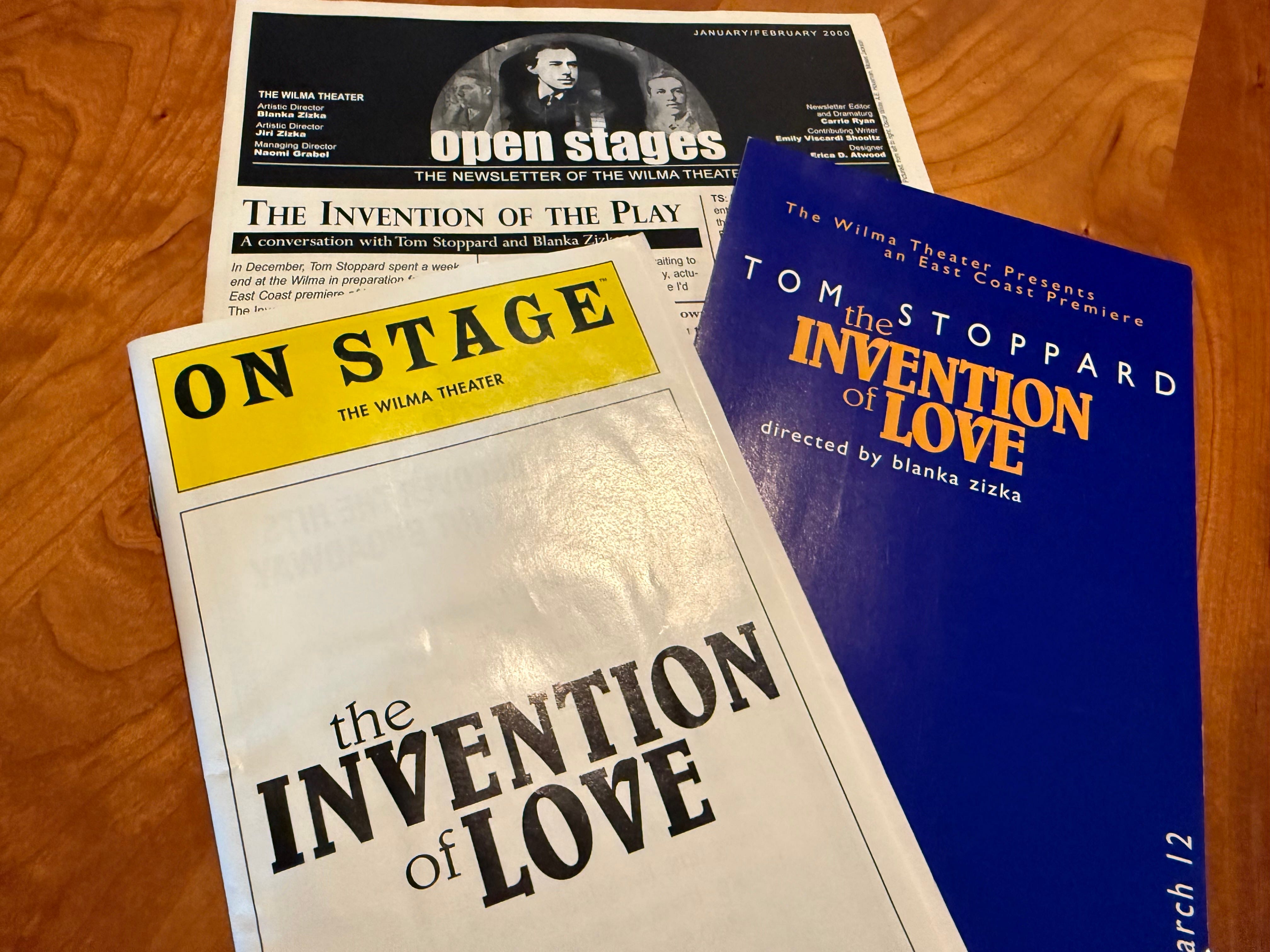
I was new to the city and just out of college. Young and enthusiastic, but also green in the field and lonely in the community. I poured myself into my work and that theater every day because I felt the value in what I was doing, but also because I didn't have a lot else to do while I built relationships in a new place.
I would work late often. There was always something to do. One of those nights happened to coincide with an evening rehearsal of this Tom Stoppard play that we were premiering on the East Coast. I knew nothing about Sir Tom at the time, or his illustrious history in the theater. Honestly, I didn't know much about theater or the process at all. I didn't study theater, didn't attend an art school, didn't do anything that gave me deeper behind-the-scenes knowledge beyond a few high school musicals.
For some reason, that night I decided to slip into the back of the house for the rehearsal. The set had already been installed and the stage was lit, but the house was dark. I remember feeling invisible in that back row, like a silent witness to something I wasn't quite meant to see.
Blanka Zizka was directing, and she was on stage with the performers working through a specific scene. I know now that Stoppard's writing is beautiful but demanding, and that it asks a great deal of its performers. That night, the artists were fully dedicated to finding the voice of the show. I watched take after take, actors exploring different variations of a phrasing, while Blanka deftly guided them toward something truer. Everyone was so locked into the moment, so committed to making the scene work. And there I was, silently watching it unfold. I got to see where it started and how it took shape. And not only the how. I got to hear the why. Actors and directors talked through the motivations of each beat, what they believed their character was feeling in that exact moment.
That was my first real awakening to the power of process. I slipped out just before they finished, back onto Broad Street, energized by what I had just witnessed. Newly addicted to this company and this show.
As I look at the field now, I long to share that feeling with our audiences. That specific, electric experience of being a silent observer.
It could be as simple as opening our rehearsals and letting audiences be exactly that, a silent observer. Give them a chance to truly experience the work that goes into a production. To see firsthand how much an artist wrestles with a single phrase. How much attention goes into a monologue, how much deliberation goes into a single lighting cue.
I have been part of plenty of initial table reads, where designers share their visions and actors explore the script for the first time. Those are fun events, and they have their place. But they always felt a little staged to me. I want people to see more than that. I want them to see the rawness of creation, the nakedness of a process that is unaware, or unconcerned, that it's being observed. Because that is the sacred thing, the part we tend to hoard. Watching people make something while they are not performing the making of it.
If that is the start, imagine going further. Audiences watching artists labor over a single scene for two hours, seeing where they begin and where they arrive by the end. Then, imagine those same people in the seats on opening night and watching to see what survived or what changed. To witness the journey and then the destination. I can't think of a more powerful way to turn someone into a true believer.
I want this because I remember how exciting it felt to me. I want others to feel that same pull. To slip into the dark, feel invisible, and walk back out onto the street changed.